
Fort Myers, Florida, known as the City of Palms, has an old park dedicated to them in downtown, the Park of Palms. Unfortunately there isn’t
much information about this park, expect this plaque and the 37 different palms in this small park. In
this post we’ll look at some of the more common ones used in SW Florida as landscape
palms.

Sabal Palm
The state tree of Florida, also known as the cabbage palm, has a solitary trunk with a compact crown. Palms are known for their crown of evergreen leaves. These leaves are palmately or fan-shaped.


Canary Island Date Palm
This Phoenix canariensis
is one of my favorites. It grows from 40 to 60 feet tall with a wonderfully
large 20 to 40 foot spread and 20 foot long pinnated or feather-like shaped leaves. The leaves on the specimen below are so long they hide its trunk.


Adonidia Palm
Also known as Veitchia
merrilli or Christmas palm due to its red berries is a self-cleaning palm. When
the fronds die they easily peal off leaving a very clean looking trunk unlike a
lot of its fellow palms that have a crosshatch trunk once leaves are removed.


Coconut Palm
Or Cocos nucifera is a
tropical palm found commonly in the Western Pacific and often conjures images of sunny destinations. They grow 50 to 80 feet tall with 15 to 17 foot long
pinnates of olive green.


Fishtail Palm
Caryota mitis is
an unusual looking palm with a bi-pinnated leaf resembling a fish’s tail. This palm
grows in clusters from the ground unlike the solitary palms that have one growing point on top.


Areca Palms
Known as Dypisis lutescens, these palms also grow in a
cluster. They are commonly used as a screening hedge for privacy as the different heights of growth tend to resemble more of a bush than a tree. When manicured, like the specimen below, you can see the trunks.


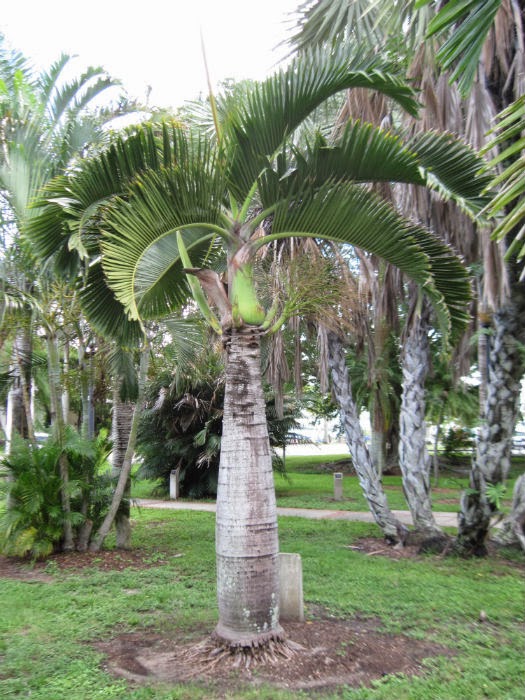
Bottle Palm
Hyophorbe lagenicaulis has
a unique round base. Their curved striking pinnated leaves usually number 6 to 7. Their slow growth, usually to 10 feet, make for interesting landscape features.

Triangle Palm
Neodypsis decay has a very unique geometrical shape. The pinnated fronds grow from three different sections forming a unique crown.


Pygmy Date Palm
This common palm, also
known as Phoenix roebelenii, is popular for its small
compact and distinct form. A popular focal point found in pots or a bordered flower garden.


Silver Bismark Palm
This Bismarkia nobilis has
huge palmated leaves with an unusual silver-grey coloring. They can have
big crowns and add a striking dimension to the landscape.


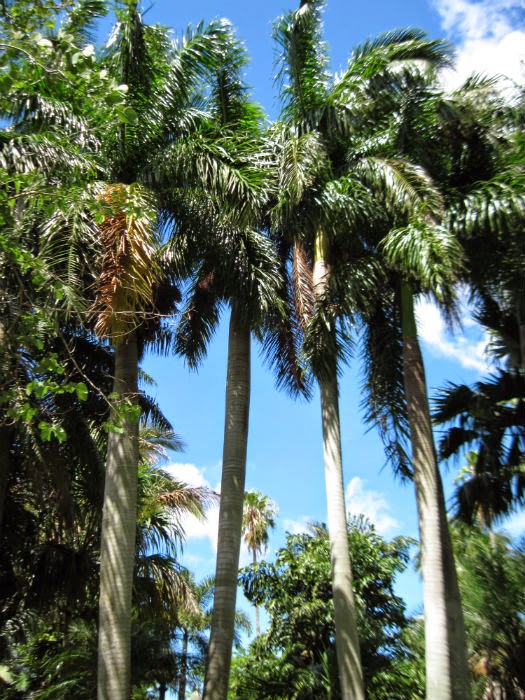
Royal Palm
Roystonea regis have self-cleaning trunks like the adonidia. These palms grow tall up to 80 feet. Thomas Edison, the famed inventor, had a mile of them planted along his Seminole Lodge Estate in Fort Myers. The city later added more miles of them inspiring the name; the City of Palms.

Next time we’ll look at some uncommon palms in Park of Palms: Part II.


